Azzurra
[aˈdzur.ra]Azzurra is the feminine form of the Italian word azzurro, meaning azure or light blue. It is the colour Italy's national teams are nicknamed for — gli Azzurri — and the word goes back through Arabic and Persian to the name of lapis lazuli.
Temperament
Related Names
Azzura
Not documented as a word or name in the sources checked
Azzurro
Italian word for blue, recorded as a rare masculine given name in Italian
Adria
Short form of Adriana
Aviator
Foschia
Lunetta
No documented meaning; recorded as an Italian feminine given name
Aaliyah
Feminine form of the Arabic name Aali, used in several Turkic and South Asian languages
Addison
From an English surname meaning "son of Adam"
Adhira
Borrowed from Sanskrit अधीर (adhīra)
Adriana
Latin, the feminine of Adrian — 'from Hadria', a town in northern Italy.
Italian has two blues, and azzurro is the lighter one
English lumps a whole spectrum under "blue". Italian splits it, and the split is not decorative. Blu is the general word and leans dark; azzurro is the light, clear blue of a midday sky, and it is the word you would use for it — il cielo azzurro. A pair of jeans is blu. The sea on a good day is azzurra.
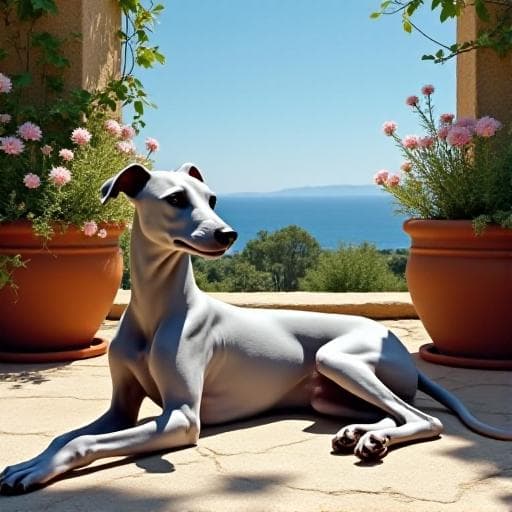
Azzurra is simply the feminine form. Italian adjectives agree with their noun, so a masculine noun takes azzurro and a feminine one takes azzurra. That is how the word became a name: give it to a girl, a boat or a dog, and the -a you need is already there.
The word is Persian, and it is the same stone as sapphire
Azzurro did not start in Italy. It comes from medieval Latin lazurium, from Arabic al-lazaward, from Persian lajvard — and lajvard is the Persian name for lapis lazuli, the deep blue stone mined in what is now Afghanistan. English azure arrives by the same road. Sapphire arrives by a parallel one. Several languages back, Azzurra and Sapphira are pointing at the same rock.
This is the sort of detail that makes a name easier to remember and harder to explain at a dog park. The short version is that azzurra is a colour word, and the colour it names is the one you get when you grind lapis lazuli.
Why the national teams wear it
In Italian, gli Azzurri — "the Blues" — means the country's national teams. Football above all, but rugby and most of the others too. The colour was not taken from the flag; the Italian tricolore has no blue in it at all.
It comes from the House of Savoy, the royal dynasty that ruled the Kingdom of Italy from 1861 to 1946 and whose colour was a particular azure. The association is older than the kingdom: in 1366 Amadeus VI, Count of Savoy, carried a blue flag in honour of the Madonna, and blue has been the Savoy colour since the Middle Ages. When Italy became a republic the monarchy went and the blue stayed, because by then it belonged to the teams rather than to the crown.
There is a second Azzurra worth knowing in Italy: the name of the country's first serious challenger for the America's Cup, backed by the Aga Khan and Gianni Agnelli, managed by Luca Cordero di Montezemolo and skippered by Cino Ricci, which competed in 1982 and 1983 and did not get past the Louis Vuitton Cup. It made the word a sporting name as well as a colour.
Three syllables and a double z
Azzurra is ah-DZOOR-rah in Italian, with the zz pronounced as a long, buzzy ts or dz and the stress on the middle syllable. English speakers usually flatten it to ah-ZOO-rah, which is close enough to work and loses the buzz entirely.
Three syllables is long for a recall cue, and the double z is the one part of the name a foreign mouth will not reproduce. Both problems have the same fix: choose a short form and use it consistently from the first day. Zura, Zuzu and Azza all keep the shape of the name, and Zuzu is short, high and easy to hear against traffic.
What the name does have going for it as a dog name is the ending. A final -a is an open vowel a dog can hold onto, which is why so many working and herding names across Europe end that way. Azzurra is also one of the few genuinely Italian names that does not sound like a translation of an English one.
See also: Italian dog names · Cielo · Bianca · Luna · Fiore
Common questions
Is Azzurra the same as Blu?
No. Blu is the general Italian word for blue and tends dark; azzurro is the lighter, clearer blue of a midday sky. The distinction is as ordinary in Italian as the difference between pink and red is in English.
Can Azzurra be a boy's name?
Grammatically, no — the -a ending is feminine and the masculine form is Azzurro. Azzurro does get used for boats and occasionally for male animals, but as a dog's name Azzurra is the form people will recognise.
Sources
- Wiktionary: azzurro (etymology)
- Wikipedia: Savoy blue
- ThoughtCo: why light blue is the national colour of Italy
- Wikipedia: Azzurra (America's Cup)
Page reviewed .