Egan
[ˈiːɡən]Egan is an Irish surname used as a given name, from Mac Aodhagáin — the personal name Aodh, from aedh, "fire", with the diminutive ending -án. Name books often connect it to Eoghan instead, which is a different name.
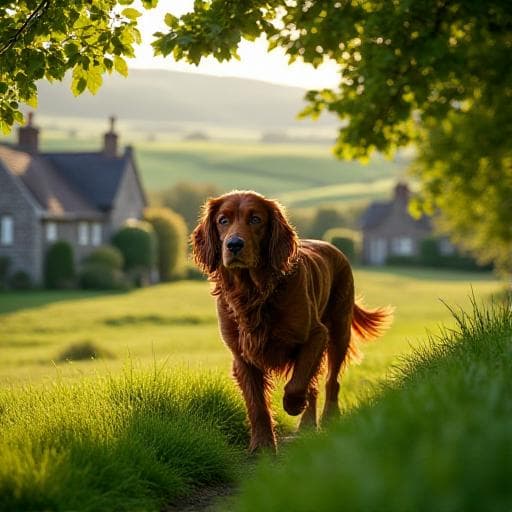
Temperament
Related Names
Elon
Means "oak tree" in Hebrew
Eoghan
Possibly "born from the yew tree", from Old Irish e "yew" and the suffix gan "born"
Eric
From the Old Norse Eiríkr, "ever ruler" or "sole ruler"
Erik
Scandinavian form of Eric, from Old Norse Eiríkr, usually taken to mean "sole ruler" or "eternal ruler".
Berko
Means "first born" in Akan
Bram
Short form of Abraham
Cian
Ancient Irish name meaning 'enduring' or 'ancient'.
Dego
Eero
Finnish and Estonian form of Eric.
Elouan
Possibly from a Breton word meaning "light"
Where the name actually comes from
Egan is the anglicisation of an Irish surname: Mac Aodhagáin, or in the other family line Ó hAodhagáin. The root is the personal name Aodh, from the Old Irish aedh, meaning fire, with the diminutive ending -án attached. So the name is a patronymic built on a word for fire, plus a suffix that makes it small or familiar — the same move that turns a name into a nickname in most European languages.
The variants are unusually numerous for one name. Egan, Eagan, Keegan, McKeegan, MacEgan, Kegan, Keagan and Egen all come from the same source, and the north of County Tipperary is usually given as the family seat. The Mac and Ó forms, and the K spellings, are one name heard and written down by different clerks in different centuries.
The yew tree that is not in it
Our own listing gives the meaning of Egan as a form of the Irish name Eoghan, meaning "born of the yew tree". There are two things wrong with that.
The first is the connection. Egan is normally derived from Aodh, not from Eoghan. They are different Irish names with different roots, and while both have ended up in the same English spellings in places, that is a collision of spelling rather than a shared origin.
The second is the meaning. Eoghan — Éogan in Old Irish — is generally taken to come from the Latin Eugenius, and so to mean "noble born"; some scholars prefer an older Celtic root reconstructed as Iwagenas. What no serious source gives it is "born of the yew tree". That is a folk etymology, and it is exactly the sort of thing that gets copied from one name website to the next until it looks like a fact.
How Egan behaves as a name
EE-gun. Two syllables, stress on the first, ending on an unstressed syllable that is easy to swallow. That is the one thing to watch: the second vowel tends to reduce to almost nothing in English speech, which is fine, but it means the name has less carrying power at the end than a name finishing on a long vowel.
The opening is strong — a clean vowel followed by a hard g — and the whole thing is short. As a dog name it is unusual without being difficult, and it does not sound like any of the standard pet names. It will be mistaken for Ethan occasionally, and you will get used to it.
Common questions
Does Egan mean "born of the yew tree"?
No. That claim appears in our own listing and it is not supported. Egan comes from Aodh, meaning fire. The yew-tree meaning belongs to a different derivation, and that one is itself disputed — Eoghan is generally taken from Latin Eugenius, "noble born".
Is Egan Irish?
Yes. It is the anglicisation of Mac Aodhagáin, an Irish surname associated particularly with the north of County Tipperary, with the variants Eagan, Keegan and MacEgan.
Sources
Page reviewed .